
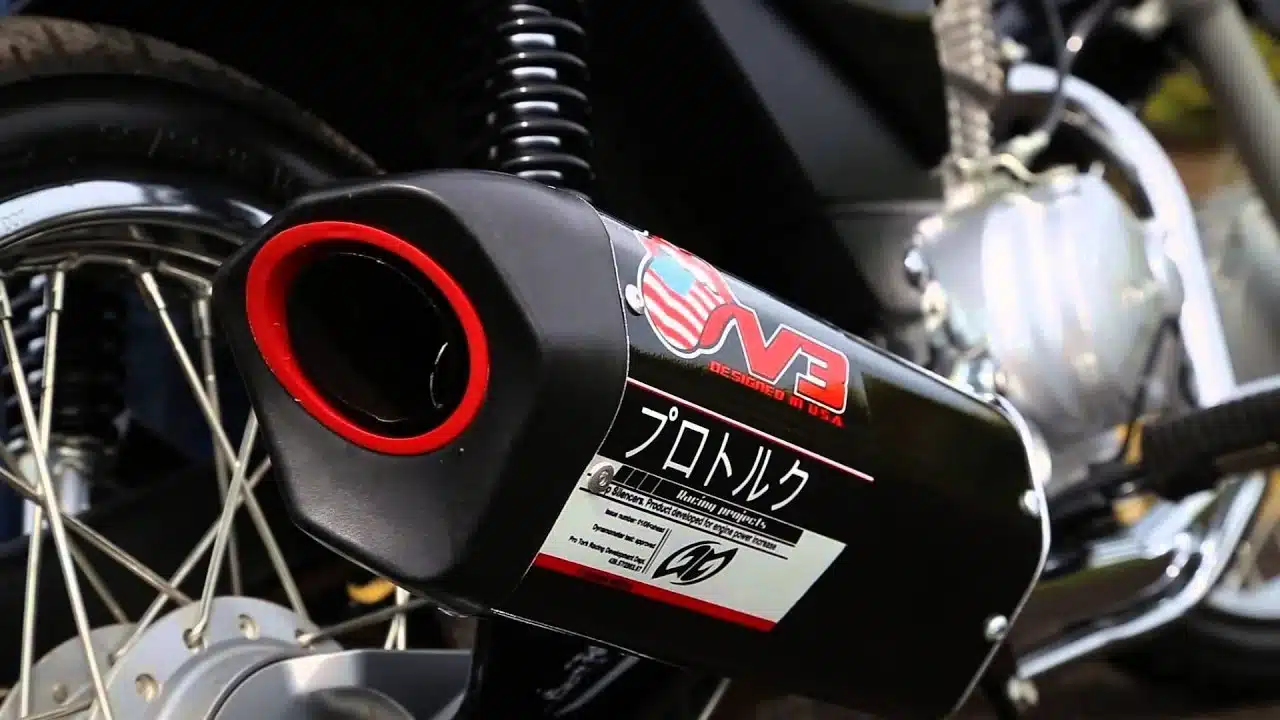
Most riders approach escapamento RD with backwards assumptions, treating exhaust systems as simple bolt-on upgrades rather than integral engineering compromises. The reality? Your Yamaha RD’s factory exhaust wasn’t conservative; it was strategically calculated. Brazil’s workshop culture didn’t revolutionize two-stroke performance through magic; they understood pressure wave physics better than weekend mechanics ever will.
After decades of watching enthusiasts waste money on wrong pipe dimensions and hearing the same tuning myths recycled across forums, it’s time someone explained escapamento RD from a practitioner’s perspective rather than romantic nostalgia. Whether you’re restoring an RD135, RD250, or RD350, understanding why certain modifications fail while others succeed separates functional motorcycles from garage ornaments. The sound everyone chases? That’s actually your engine telling you whether combustion timing matches expansion chamber geometry, not just aesthetic performance.
Why Your “Upgraded” Escapamento Probably Made Things Worse
Walk into any Brazilian garage claiming aftermarket expertise, and you’ll hear promises of 20% horsepower increases through custom exhausts. Reality check: most riders actually lose mid-range torque chasing top-end RPM gains they’ll never use on streets.
The stock escapamento on RD bikes prioritized drivability across RPM ranges. Yamaha engineers weren’t stupid; they balanced power delivery, fuel efficiency, and heat management for real-world riding conditions. That “restrictive” factory pipe? It prevented your engine from cooking itself during urban traffic.
Here’s what actually happens when you bolt on that shiny aço inox 304 system without understanding expansion chamber physics:
- Shorter chambers move the power band higher, killing acceleration below 6000 RPM
- Wider diameter pipes reduce gas velocity, destroying pressure wave timing
- Chrome finishes look great, but change thermal characteristics affecting combustion
- Most custom builders copy dimensions without testing actual performance
Paulo Andrade and Lucas Moreira, respected Brazilian tuners, privately admit half their customers would perform better with original specifications. But try telling that to someone who just spent three months’ salary on hand-welded stainless steel.
The 1980s and 1990s drag racing scene created mythology around certain pipe designs. Problem: those setups optimized quarter-mile acceleration, making bikes essentially unrideable in city conditions where most RD owners actually ride.
The Real Function Nobody Explains Correctly
Two-stroke engines don’t just need exhausts; they need precisely timed acoustic reflectors. Every motorcycle guide explains gas expulsion and airflow optimization, but nobody discusses why your bike’s character changes with ambient temperature.
Expansion chambers work through pressure waves bouncing at specific speeds. When metal heats up, its dimensions change microscopically. That’s why your RD feels different on cold mornings versus after twenty minutes riding, the escapamento’s internal geometry literally shifts.
Carbon deposits don’t just restrict flow; they alter resonance frequencies. A clean pipe versus one with buildup can shift power delivery by 800 RPM. Yet most maintenance guides treat decarbonizing as optional rather than a critical tuning adjustment.
The four functions everyone lists, gas expulsion, airflow optimization, acoustic performance, and heat management, interact dynamically. Optimise one, you compromise another. Factory engineers spent years finding acceptable compromises. Weekend tuners spend Saturday afternoon guessing.
Aço-carbono versus aço inox 304 isn’t just about corrosion resistance. Steel types conduct heat differently, affecting thermal expansion rates and pressure wave propagation speeds. Material choice impacts performance as much as shape.
Want proof? Take identical expansion chambers, one mild steel, one stainless steel 304. Mount on the same engine, back-to-back dyno testing. You’ll see power curves differ by 5-8% at certain RPM ranges purely from material properties.
What Brazilian Street Culture Actually Taught Us
Brazil’s RD obsession gets romanticized as pure passion, but the real lesson was brutal trial-and-error efficiency. Local workshops didn’t have dyno equipment or software simulations; they had fifty bikes and riders willing to test modifications immediately.
This created rapid iteration cycles that Western restoration purists miss entirely. A custom pipe design could be tested, refined, and validated within weeks across multiple street racing scenarios and urban conditions.
The youth culture connection wasn’t rebellion; it was accessibility. RD bikes cost what teenagers could afford while delivering modification potential that expensive four-stroke motorcycles couldn’t match. Customization became an economic necessity, not a fashion statement.
Community hubs formed around garages because parts were scarce. You couldn’t order original specifications online. Every broken weld or rust problem required improvised solutions using available materials. This forced genuine mechanical creativity rather than catalogue shopping.
Tuning tips spread through riding together, not forum posts. If your pipe made the bike unrideable in traffic, everyone knew immediately. Bad designs died fast. Good ones proliferated through direct demonstration.
Portugal developed different tuning philosophies because geography demanded different priorities. Mountain roads rewarded mid-range torque; Brazilian flat highways favoured top-end power. Same motorcycles, radically different optimal exhaust configurations.
Japan preserved stock systems not from conservatism but understanding that Yamaha’s engineering already maximized potential within legal constraints. Japanese enthusiasts focused on maintenance perfection rather than modification obsession.
Installation Mistakes That Destroy Performance
Most installation guides assume you’re competent. Let me assume you’re not, because that’s usually accurate.
Gasket compound application matters more than torque specifications. Over-tightening without proper sealing will create leaks that destroy power and create false tuning diagnoses. Under-tighten with excessive compound, you’ll restrict flow and again lose performance.
Footpeg clearance isn’t just about ground contact. Incorrect positioning changes exhaust routing angles, affecting gas velocity and pressure wave formation. That authentic visual everyone wants? It’s functional engineering, not a styling choice.
Kickstarter interference seems obvious until you’ve installed everything, test-started your bike, and heard metal grinding. Now you’re removing the entire system again. Measure twice, curse once instead of vice versa.
Mounting point alignment affects thermal expansion behaviour. If your pipe is slightly twisted during installation, heat will exacerbate the misalignment until welds crack or mounting brackets fail.
Chrome and black finishes aren’t just aesthetic. They affect heat dissipation rates. A chromed exhaust runs hotter than bare metal or flat black, changing combustion characteristics and engine temperatures.
The curve options stamped versus smooth impact turbulence patterns inside the pipe. Stamped curves create minor flow disruptions that some engines tolerate better than others, depending on port timing and carburettor setup.
Maintenance Reality vs. Internet Advice
Chemical treatments for carbon removal rarely work as advertised. Two-stroke deposits form hard, glazed layers that chemicals can’t penetrate effectively. Heating methods work but risk damaging welds if done improperly.
The real solution? Prevent buildup through correct oil ratios and proper tuning. Rich fuel mixtures dump unburned hydrocarbons into exhausts, where they cook into carbon. Lean too much, and you risk a seizure. The window is narrower than most think.
Rust in humid climates isn’t inevitable if you understand moisture behaviour. Exhausts cool after riding, creating negative pressure that sucks humid air inside. Park bikes with engines slightly warm in covered spaces, and corrosion rates plummet.
Silencer repacking schedules depend on riding style, not arbitrary intervals. Aggressive throttle use and high RPM operation degrade packing faster than gentle urban commuting. Inspect rather than following calendar dates.
Leaks in flanges usually indicate thermal cycling stress rather than installation problems. Metal expands/contracts repeatedly, fatiguing connection points. This is normal wear, not manufacturing defects.
Rust-resistant paint is a temporary solution. Proper chrome or high-temp ceramic coatings cost more upfront but last longer. Calculate the total cost over the ownership period rather than the initial expense.
Escapamento RD Performance Myths You Should Stop Believing
Myth 1: Louder equals more power.
Reality: Sound volume correlates with exhaust velocity and chamber design, not horsepower. Many loud pipes actually sacrifice low-end torque for acoustic drama.
Myth 2: Bigger diameter always improves performance.
Reality: Oversized pipes reduce gas velocity below critical thresholds for effective pressure wave reflection. You lose power across most RPM ranges despite “less restriction.”
Myth 3: Stainless steel is always better than carbon steel.
Reality: Aço inox 304 resists corrosion but weighs more and conducts heat differently. For pure performance, properly maintained aço-carbono often delivers better results.
Myth 4: Modern CAD modelling produces superior designs to hand-built pipes.
Reality: Software models make assumptions about real-world conditions. Experienced builders incorporate variables that equations miss. Best results combine both approaches.
Myth 5: Stock exhausts are always inadequate.
Reality: For street riding with occasional spirited acceleration, factory systems often provide the best overall drivability. Aftermarket makes sense for specific applications, not universal upgrades.
The Economics Nobody Discusses
A quality aftermarket escapamento costs roughly what you’d spend on comprehensive engine maintenance over two years. That custom-welded stainless system? It’s deferred valve timing checks, carburettor rebuilds, and suspension service.
Original parts command premium prices in vintage markets, not because they’re superior but because they’re finite. Every crashed RD reduces available stock exhausts. Reproduction quality varies wildly, making originals a safer investment for restoration projects.
Installation by professionals versus DIY changes cost-benefit dramatically. Botch it yourself, you’ll pay mechanics to fix your mistakes, plus the original job. Unless you’re genuinely competent, expert installation saves money long-term.
Warranty coverage of 6 months against manufacturing defects matters less than the builder’s reputation. Established manufacturers like Torbal honour guarantees. Unknown sellers disappear when welds crack after three months.
Delivery times of 10 business days seem reasonable until your bike’s completely disassembled, waiting for parts. Factor time without a bike into cost calculations, especially if it’s your primary transportation.
Regional Specification Differences That Matter
RD135 models popular in Brazilian markets required different exhaust tuning than RD250 or RD350 variants common elsewhere. Displacement affects optimal expansion chamber volumes and lengths significantly.
Urban versus highway optimization isn’t marketing, it’s a real engineering trade-off. Pipes dimensioned for quick response sacrifice top-end power. Conversely, drag racing setups become frustrating in stop-and-go traffic.
Estribo (footpeg) positioning varies between markets and model years. That reproduction exhaust perfectly fitted to one variant might require modification for another, despite identical engine specifications.
Kickstarter designs changed during production runs. Original versus replica compatibility matters when clearance tolerances are millimetres. Verify specific part numbers, not just model designation.
Curve options stamped versus smooth weren’t aesthetic choices. Different markets had different noise regulations requiring varied internal baffling and chamber geometries behind identical external appearances.
What Modern Technology Actually Improves
CNC machining delivers consistency that hand welding never could. Every pipe matches specifications within microns. But this precision means designs can’t be iteratively adjusted during production as custom builders do.
CAD modelling lets engineers test hundreds of variations virtually before cutting metal. However, models require accurate input data. Garbage assumptions produce precise garbage results.
3D scanning of original exhausts enables perfect reproductions of discontinued parts. But scanning captures worn dimensions, not factory-fresh specifications. Smart manufacturers adjust for expected wear patterns.
High-temp coatings using modern chemistry outperform traditional chrome or paint. Ceramic thermal barriers reduce heat transfer while resisting corrosion better than anything available in the 1970s.
YouTube and social media democratize knowledge that once required local workshop access. But video quality varies from expert insights to dangerous misinformation with no gatekeeping.
The Restoration vs. Modification Decision
Collectors preserving museum-quality examples need period-correct components regardless of performance. Provenance and authenticity determine value more than ridability.
Riders actually using bikes should prioritize function over historical accuracy. Modern materials and manufacturing improve reliability without sacrificing character.
Investment calculations differ radically. Original parts appreciate; quality aftermarket depreciates. Choose based on whether the bike is an asset or a tool.
Compliance with current regulations matters more than historical authenticity if you plan street riding. Some regions ban two-stroke motorcycles entirely; others have noise limits that vintage exhausts exceed.
Future availability of replacement parts should influence decisions. As RD populations shrink, certain components become effectively unobtainable. Reproduction parts ensure continued rideability when originals fail.
Conclusion
The escapamento RD represents where engineering meets economics, nostalgia collides with physics, and passion often overwhelms practicality. Most riders would achieve better results spending exhaust modification budgets on proper tuning, fresh gaskets, and quality carburettor rebuilds.
But that advice ignores why people own RD bikes in the first place; these motorcycles reward customization, experimentation and mechanical involvement in ways modern bikes never will. If you understand that aftermarket pipes are about the journey more than the destination, about learning two-stroke behaviour through direct experimentation, then even “failed” modifications teach valuable lessons.
The Brazilian workshop culture, Portuguese mountain tuning, and Japanese preservation approaches all offer valid paths forward. Choose based on how you actually ride rather than how you wish you did. Your escapamento should match your riding reality, not Instagram performance fantasies.
Frequently Asked Questions
Q1: Does louder escapamento RD mean more power?
No. Sound volume relates to exhaust velocity and chamber design, not horsepower. Many loud pipes sacrifice low-end torque for acoustic drama without actual performance gains.
Q2: Is stainless steel always better than carbon steel?
Not necessarily. Aço inox 304 resists corrosion but weighs more and conducts heat differently. Properly maintained aço-carbono often delivers better performance for street riding.
Q3: Should I replace my stock escapamento RD?
Only for specific applications. Factory systems provide the best drivability for street riding. Aftermarket exhausts suit drag racing or specialized tuning, not universal upgrades for all riders.
Q4: How often should I clean carbon buildup?
Depends on riding style. Prevent buildup through correct oil ratios and proper tuning. Inspect regularly rather than following arbitrary schedules. Aggressive throttle use requires more frequent maintenance.
Q5: Why does my RD bike feel different when cold?
Expansion chambers work through pressure waves at specific speeds. When metal heats up, its dimensions change microscopically, altering performance. Temperature affects exhaust geometry and power delivery.
Q6: Are custom exhausts better than reproductions?
Depends on the purpose. Custom builders can optimize for specific riding conditions. Quality reproductions offer consistency and a warranty. Choose based on whether you need specialized tuning or reliability.
