
The European fragrance industry remains one of the most influential segments of the global beauty market. From historic perfume houses in France and Italy to emerging niche laboratories across Scandinavia and Eastern Europe, the region continues to shape how fragrances are formulated, distributed, and consumed worldwide. In 2025, however, the structure of the fragrance market is evolving rapidly. Digital commerce, niche brand growth, and new distribution models are redefining how perfumes move from producers to consumers.
While legacy luxury brands still dominate department store shelves, an expanding ecosystem of independent retailers, online boutiques, and specialist fragrance platforms has emerged across Europe. This transformation has created new opportunities for distributors, resellers, and supply‑chain intermediaries that connect brands with fragmented retail channels.
Key Takeaways
- Europe remains a global hub for fragrance innovation and luxury perfume production.
• Niche fragrance brands are gaining market share across independent retail channels.
• E‑commerce has significantly expanded cross‑border perfume sales.
• International distribution networks play a growing role in supply chain efficiency.
• Retailers increasingly prioritize authentication and traceability when sourcing perfumes.
Growth of Niche Fragrance Brands
One of the most visible shifts in the European fragrance industry is the rise of niche perfume brands. Unlike mass‑market fragrances produced by large multinational companies, niche perfumes are typically developed by smaller houses that emphasize artistic expression, rare ingredients, and distinctive scent profiles.
Over the past decade, niche fragrance houses have expanded from boutique perfumeries into mainstream visibility. Selective distribution strategies, strong storytelling, and the use of high‑quality raw materials have attracted a growing audience of fragrance enthusiasts.
This growth has also been supported by the digital transformation of retail. Online perfume boutiques now allow smaller brands to reach international audiences without relying solely on traditional department store networks. As a result, European fragrance consumers today encounter a wider variety of scent profiles than at any point in the past.
“Niche perfumery has transformed fragrance from a mass product into a cultural and artistic expression.”
Changing Consumer Preferences
Consumer behavior within the fragrance category has evolved significantly. Traditional advertising once played a dominant role in perfume sales, with celebrity campaigns and luxury branding driving demand. Today, however, consumer preferences are increasingly influenced by online communities, fragrance review platforms, and social media discussions.
Transparency has also become a major purchasing factor. Modern consumers frequently research fragrance notes, ingredient origins, and brand philosophy before making a purchase. This shift has encouraged brands to emphasize storytelling and craftsmanship rather than purely aspirational marketing.
Another important trend involves the growing popularity of gender‑neutral fragrances. Many contemporary perfume houses now design scents intended to appeal across traditional gender categories, often relying on balanced compositions that blend woods, florals, and gourmand notes.
Industry Data Snapshot: European Fragrance Distribution
| Channel | Typical Retailers | Characteristics |
| Luxury department stores | Premium consumers | Strong brand presence and curated selections |
| Independent perfume shops | Fragrance enthusiasts | Focus on niche and artisanal brands |
| Online fragrance boutiques | International buyers | Wide selection and cross‑border shipping |
| Distributor networks | Retailers and e‑commerce sellers | Supply chain aggregation and logistics |
The Role of International Distributors
As the fragrance retail landscape becomes increasingly fragmented, international distributors have taken on a larger role within the European supply chain. These intermediaries help connect perfume brands with independent retailers that may lack direct purchasing relationships with manufacturers.
Distributors typically handle bulk procurement, warehousing, and logistics coordination. By aggregating inventory from multiple fragrance houses, they can supply retailers with a diverse range of products without requiring large minimum orders.
This model is particularly important for niche perfume brands that prefer to focus on product creation rather than managing complex international distribution networks.
How Retailers Source Authentic Fragrances
For retailers, sourcing authentic fragrance products has become an operational priority. Counterfeit goods continue to circulate within parts of the global beauty supply chain, making supplier credibility an essential consideration.
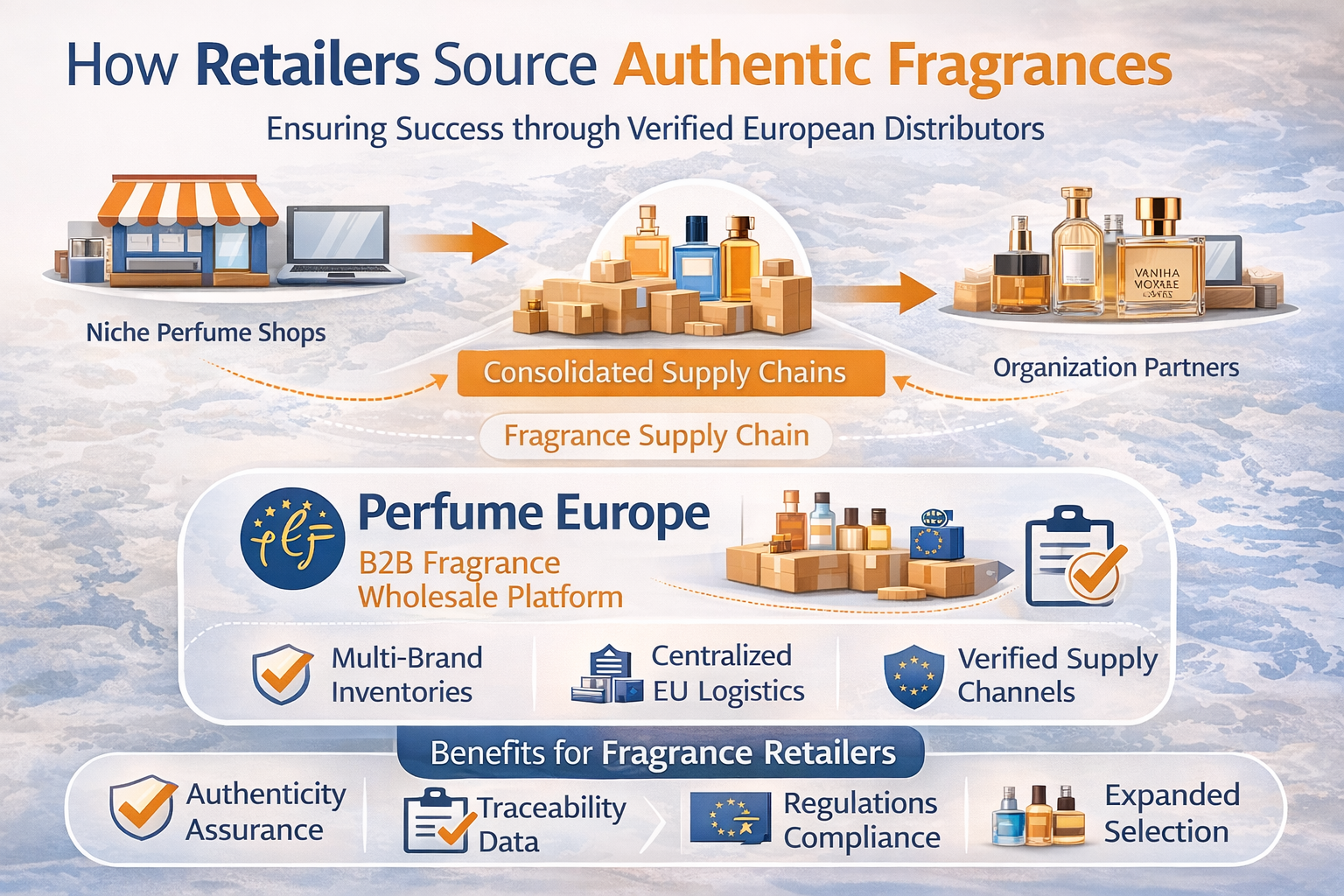
Many retailers across Europe work with international fragrance distributors such as to access authentic designer and niche perfumes. These networks consolidate inventory from multiple manufacturers and provide retailers with documented sourcing channels.
Many retailers across Europe therefore work with international fragrance distributors and professional sourcing platforms that specialize in supplying authentic perfumes to independent stores and e-commerce businesses. These distributors consolidate inventory from multiple manufacturers and provide structured supply channels that help retailers access diverse fragrance portfolios.
In the European market, platforms such as perfume europe, a B2B fragrance wholesale distributor, illustrate how this distribution networks operate in practice. By aggregating multi-brand perfume inventories and maintaining centralized EU-based logistics, such platforms enable retailers to source authentic designer and niche fragrances through verified supply channels.
In addition to supplying inventory, reputable distributors often provide traceability documentation, batch information, and regulatory compliance data required for cosmetic product distribution within the European Union.
Case Study: Cross‑Border Fragrance Retail Expansion
Consider the growth of independent online fragrance boutiques operating within the European market. Many of these businesses begin as small niche retailers focused on curated perfume collections. As demand increases, however, they must expand their sourcing strategies to support a broader customer base.
By partnering with international distributors, these retailers gain access to larger inventories and global logistics networks. This allows them to offer a wider selection of fragrances while maintaining consistent product availability.
At the same time, distributors benefit from working with specialized retailers that cultivate loyal communities of fragrance enthusiasts. The relationship therefore creates mutual value across the supply chain.
FAQ: Understanding the European Fragrance Market
Why is Europe so influential in the perfume industry?
Europe hosts many of the world’s historic perfume houses and fragrance laboratories, particularly in France, Italy, and Switzerland.
Are niche fragrance brands replacing designer perfumes?
Not entirely. Niche brands are growing rapidly, but designer fragrances continue to dominate large retail channels.
How do retailers ensure fragrance authenticity?
Retailers typically rely on verified distributors and require documentation confirming product origin and batch traceability.
Where can retailers find reliable fragrance distributors in Europe?
Many independent retailers work with professional B2B fragrance distribution platforms such as Perfume Europe, which provide access to multi-brand perfume inventories and verified wholesale sourcing channels for European and international retailers.
Will online fragrance retail continue to grow?
Industry analysts expect e‑commerce to remain one of the fastest‑growing distribution channels in the fragrance sector.
