
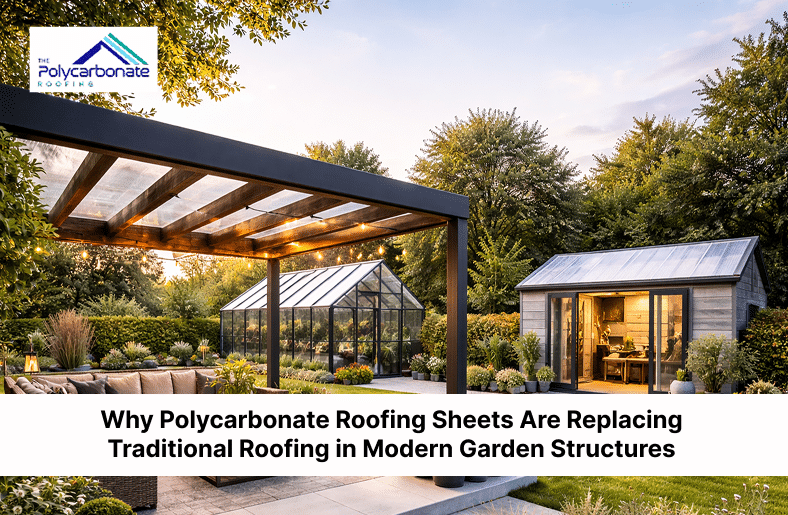
Gardens in the UK are no longer merely places of decoration utilised on warm summer weekends. In recent years, homeowners have been spending more money on practical outdoor amenities like pergolas, garden offices, greenhouses, and covered patios. These spaces increase the living space of the house and provide easy space to work, rest, or have fun outside the house.
The performance of such structures, however, depends on the type of roofing material applied. Conventional roofing materials such as felt, glass, corrugated metal, and PVC were highly favoured but were found to be difficult to meet current performance standards. Durability, heat generation, fragility, and expensive maintenance are issues many homeowners consider when contemplating better options.
This has made polycarbonate roofing sheets take the centre stage as a proven and contemporary remedy. They enjoy a reputation for being durable, weather-resistant, and lightweight, which accounts for their preference for outdoor designs in the modern day. Polycarbonate roof sheets are harder and more durable than older ones, and natural light still penetrates through the garden structures.
The following article discusses the reasons why polycarbonate roofing sheets have been in the process of replacing traditional roofing materials in the modern structure of gardens in the UK.
The Changing Garden Structure Design in UK
The UK does not have the same trends in designing gardens as it did over the past decade. Outdoor spaces are viewed as extensions of the home instead of seasonal spaces. Due to this, the homeowners have invested in structures where gardens can be utilised all year round.
Covered patios, pergolas, outdoor dining areas, and garden offices have gained significant popularity since remote working gained more popularity. These buildings need roofs that would allow the light to pass through the building yet would keep away rain, wind and fluctuating weather conditions.
Conventional roofing solutions tend to fail to balance this. Glass is light and good, but heavy and fragile, whereas metal roofs are sturdier but block sunlight and accumulate heat.
Polycarbonate roof panels provide a solution in this case. They are the right combination of transparency, strength and insulation that are suitable in modern buildings of the garden.
What is The Problem With The Traditional Roofing Materials?
In order to know the reason behind the growing use of modern materials, one should consider the shortcomings of the old roofing materials.
Felt Roofing – Short Lifespan
Felt roof is mostly applied in sheds and small garden structures as it is cheap. It, however, easily becomes rotten when exposed to the changing weather conditions.
Felt may also crack, tear, or even get wet, particularly in the rainy seasons in the UK. These problems create leaks and need constant repair or replacement, making it less useful in long-term outdoor structures.
Corrugated Metal – Noise and Heat Problems
Corrugated metal roofings are very strong; however, they also have a number of demerits in a garden environment.
In the downpour, metal roofs get too noisy. During the summer period, they trap heat and make the space beneath uncomfortable. Rust may also develop on metal roofing if not properly maintained, which affects performance and appearance.
Glass – Heavy and Fragile
Glass has been used in greenhouses and conservatories for its transparency. Yet it does not always suit the contemporary garden buildings.
Glasses are heavy and need powerful structural support. They can even fall victim to the falling branches, hail, or accidents, and break. It is also costly when compared with a modern installation.
Basic PVC Sheets – UV Degradation
PVC sheets are cheap and light, yet they tend to become deficient of long life. When frequently exposed to sunlight, they may become brittle and discoloured.
As the material deteriorates, cracks can form, reducing structural integrity and aesthetics.
Such restrictions are the reasons why polycarbonate roofing sheets have become a better alternative for outdoor buildings among many homeowners.
7 Reasons Why Polycarbonate Roofing Sheets are Replacing Conventional Roofing
1. Light and Yet Extremely Powerful
Polycarbonate roof sheets have one of the largest benefits in terms of their high strength in spite of their light weight.
Polycarbonate is 200 times stronger than glass, and this implies that it can withstand massive impact without sustaining any damage. Simultaneously, the lightweight system allows the support structures to be less heavy, simplifying installation and making it more effective.
All this makes polycarbonate roofing sheets the best to use on pergolas, garden rooms, and other outdoor applications.
2. Superior Impact Resistance
The weather in the UK is unpredictable, and in cases, there are storms, hail and heavy winds that can disrupt outdoor structures.
Polycarbonate materials are aimed at managing such conditions. Without breaking under the pressure of falling branches or hailstones, they can be resistant to the impacts and are thus a good long-term roofing choice.
This durability is one of the key reasons why polycarbonate roofing sheets are widely used in modern garden construction.
3. UV Protection Without Blocking Natural Light
One of the greatest benefits of polycarbonate roofing is that it permits natural light into the structure, but keeps out the undesirable ultraviolet light.
Most of the polycarbonate products have a UV protective coating that protects plants, exterior furniture and interiors. This makes them more appropriate, especially in pergolas and greenhouses where light is needed.
Polycarbonate usually has more impact strength and flexibility than a transparent acrylic sheet, and as a result, is more advantageous in a structural roofing application.
4. Adequate Thermal Performance
Multiwall polycarbonate designs developed today offer better insulation than most conventional materials.
Such panels are useful for controlling the temperature of garden structures by minimising heat loss during cold seasons and excessive heating in summer. They also reduce condensation that is a normal problem of single-layered plastic roofing.
This qualifies them as a viable option when using lightweight roofing panels in all-year-round outside areas.
5. Long-Term Cost Savings
Even though the cost of initial installation could be different with the project, polycarbonate roofing is very convenient in costs over the long term.
When properly installed, the material will last 10, 20, or more years. It is also a cost-effective choice given the low cost of homeowner repairs and replacements.
Polycarbonate offers long-term performance and stability for those who require reliable roofing sheets for outdoor structures.
6. Design Flexibility
Another factor that is popularising polycarbonate roofing is its design flexibility.
Polycarbonate roofing is becoming more popular because of the fact that it is versatile in terms of design.
The sheets come in several different finishes such as clear, tinted and opal. This will enable homeowners to select the level of light penetration and privacy that best fits their garden designs.
These are flexible polycarbonate roof panels that can be utilised in pergolas, carports, garden rooms, lean-to roofs, canopies, and walkways.
7. Easy DIY Installation
A large number of homeowners like materials with the ability to make them easier to install.
Polycarbonate sheets are easy to cut down to size and are lightweight, making them easy to deal with. They are also compatible with standard aluminium glazing bars and can be used for DIY garden work.
This is the reason why modern garden roofing solutions have become increasingly popular because of their easy installation.
Polycarbonate Roofing Sheets vs Transparent Acrylic Sheet – What’s the Difference?
When choosing materials for outdoor roofing, homeowners often compare polycarbonate with acrylic.
| Feature | Polycarbonate | Transparent Acrylic Sheet |
| Impact Resistance | Extremely High | Moderate |
| Flexibility | High | Lower |
| Cost | Competitive | Often higher |
| Weather Resistance | Excellent | Good |
A transparent acrylic sheet can be used as a decorative material in the form of protective panels, display cases or signs.
Nevertheless, for roofing applications that require durability, flexibility, and resistance to weather conditions, polycarbonate roofing sheets are usually more appropriate.
Reasons Modern Garden Structures Require High-Quality Roofing Material
The modern-day garden models have become a major investment among the home owners.
Garden offices, modern pergolas and so on are all meant to be practical, comfortable and attractive. With increasing expectations, the materials utilised should be of greater levels of stability and performance.
Homeowners desire light and yet rain and windproof roofing. They also desire material, which will not demand high maintenance and energy efficiency.
Due to these factors, polycarbonate roof sheets are proving to be a very viable option in terms of contemporary outdoor spaces.
Optimal Polycarbonate Roof Panels Uses
Due to their multi-purpose, polycarbonate roof panels can be applied in numerous forms of structures of the garden, such as:
- Pergola covers
- Garden offices
- Greenhouses
- Carports
- Covered patios
- Walkways
These applications underscore the reason why polycarbonate has emerged as one of the most sought-after roofing sheets for outdoor structures in contemporary landscape design.
Installation and Maintenance Hints for Long Life
Polycarbonate roofing sheets require proper maintenance and installation to perform optimally.
Key tips include:
- Install sheets with a slight slope to allow rainwater to drain.
- Apply proper sealing systems and glazing bars.
- Make sure that the UV-protected surface is facing up.
- Wash every now and then with a weak soap and water.
- Use no rough cleaning or brushes.
- These easy steps could provide you with a long-lasting roofing material.
Conclusion: The Future of Garden Roofing.
In the UK, installing garden structures has become common in modern houses. Given that homeowners keep improving their outdoor spaces, there has been an increasing demand for high-quality roofing materials that can withstand the elements.
Conventional alternatives such as felt, glass and PVC frequently find it difficult to deliver the capability, durability, and functionality demanded by modern gardens.
On the contrary, polycarbonate roofing sheets offer a viable blend of durability, natural light transmission, weather resistance, and easy installation. These merits are the reasons why they quickly become the roofing option of contemporary outdoor buildings.
Homeowners looking at quality polycarbonate roof panels should consider investing in high-quality materials to guarantee durability, performance, and attractiveness.
The Polycarbonate Roofing brand offers reliable solutions that meet the standards of contemporary garden buildings, helping homeowners build an outdoor space that is practical and durable.
FAQs
1. Can polycarbonate roofing sheets be used in the UK weather?
Yes, polycarbonate roofing sheets are weather-resistant, meaning they can withstand severe weather conditions such as heavy rain, hail, and strong winds, making them perfect for the weather in the United Kingdom.
2. What is the lifetime of polycarbonate roof sheets?
Good polycarbonate roof sheets will normally last an average of up to 20 years or so with good installation and maintenance.
3. Is it possible to install polycarbonate roof sheets as a DIY project?
Yes, the polycarbonate roofing sheets are lightweight, easy to cut and fit into common glazing systems, which is why many homeowners install them on their own.
4. Are polycarbonate roof panels that are transparent to sunlight?
Yes, polycarbonate roofing materials may allow natural light to enter the structure whilst excluding harmful UV rays, creating well-planned, cosy outdoor areas.
5. Is a polycarbonate roofing sheet superior to acrylic sheets?
In the case of structural roofing, polycarbonate roofing sheets are preferred, as they offer greater impact and flexibility than acrylic.
6. In what applications can polycarbonate roofing sheets be utilised?
Typically applied to pergolas, garden offices, greenhouses, carports, patios and other external buildings where they are needed to provide more lightweight but durable roofing.
